Beginning in Fall 2026, as a Postdoctoral Fellow at Yale University’s Institute of Sacred Music, I will also hold an appointment as Lecturer in Religion through the Department of Religious Studies where I will teach a new course I designed organized around the Tibetan Buddhist concept of the bardo, or in-between space, and the Great Liberation by Hearing, also known as The Tibetan Book of the Dead. The course introduces students to sound and listening as media of religious experiences, with a focus on states of transition and intermediacy across Tibetan Buddhist and comparative frameworks.
Liberation by Hearing: Sound and Practices of Listening to the Liminal
What does dying sound like? How do we listen to dreams? How can hearing itself become a spiritual practice, or even a path to liberation? With roots grounded in Tibetan Buddhism and branches extending across fields, disciplines, and areas, this course explores sound as a medium of religious experiences of transition and intermediacy. Life-death. Lucidity-dreaming. Desire-renunciation. We look at these instances not as moments of passage, but borderlands to be dwelled in, where sound and listening become charged with the work of guiding, unsettling, or transforming consciousness. Act I begins with a broad foundation in studies of sound, listening, and religion before introducing Buddhist frameworks and the role of mantra in tantric practice. Act II examines how sonic practices accompany dying and afterlife transitions, along with how sensory experiences can be catalysts for awakening. Act III considers the liminal space between dreams and wakefulness where Tibetan visionary practices meet comparative perspectives on dreaming, consciousness, and history. Act IV investigates the relationship between sound and longing, sexuality, and renunciation through Tibetan songs of realization. Finally, Act V turns to avant-garde appropriations of Tibetan Buddhist theories of transition, exploring how technologies of listening transform religious experience.
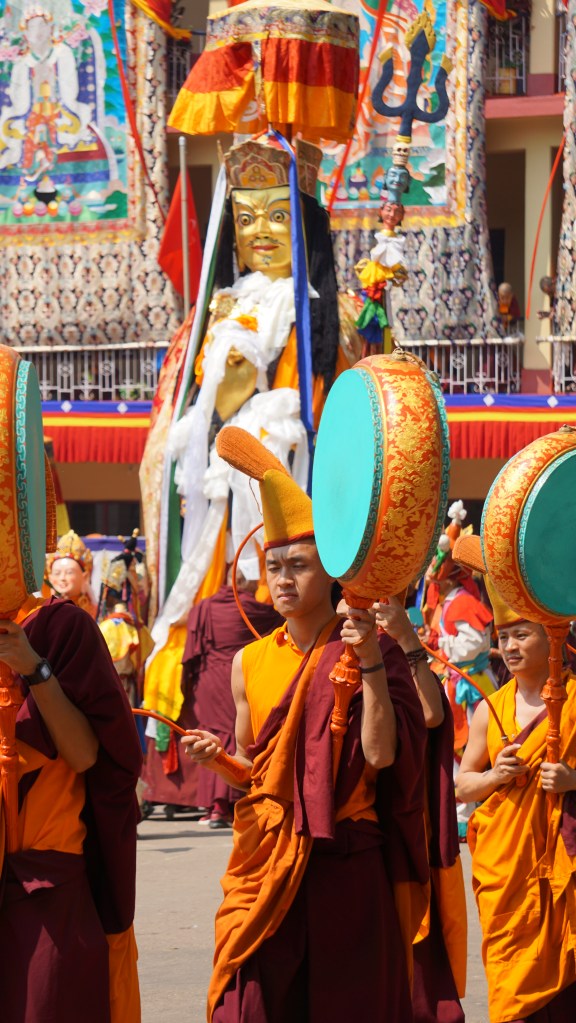
In Spring 2026, I will teach a second new course about religion, aesthetics, and experiences of intensity. This course engages with my broader interest in what aesthetic and performative practice does in religious contexts—specifically how form, sound, and intensity actively work on the religious practitioner rather than merely representing or expressing something.
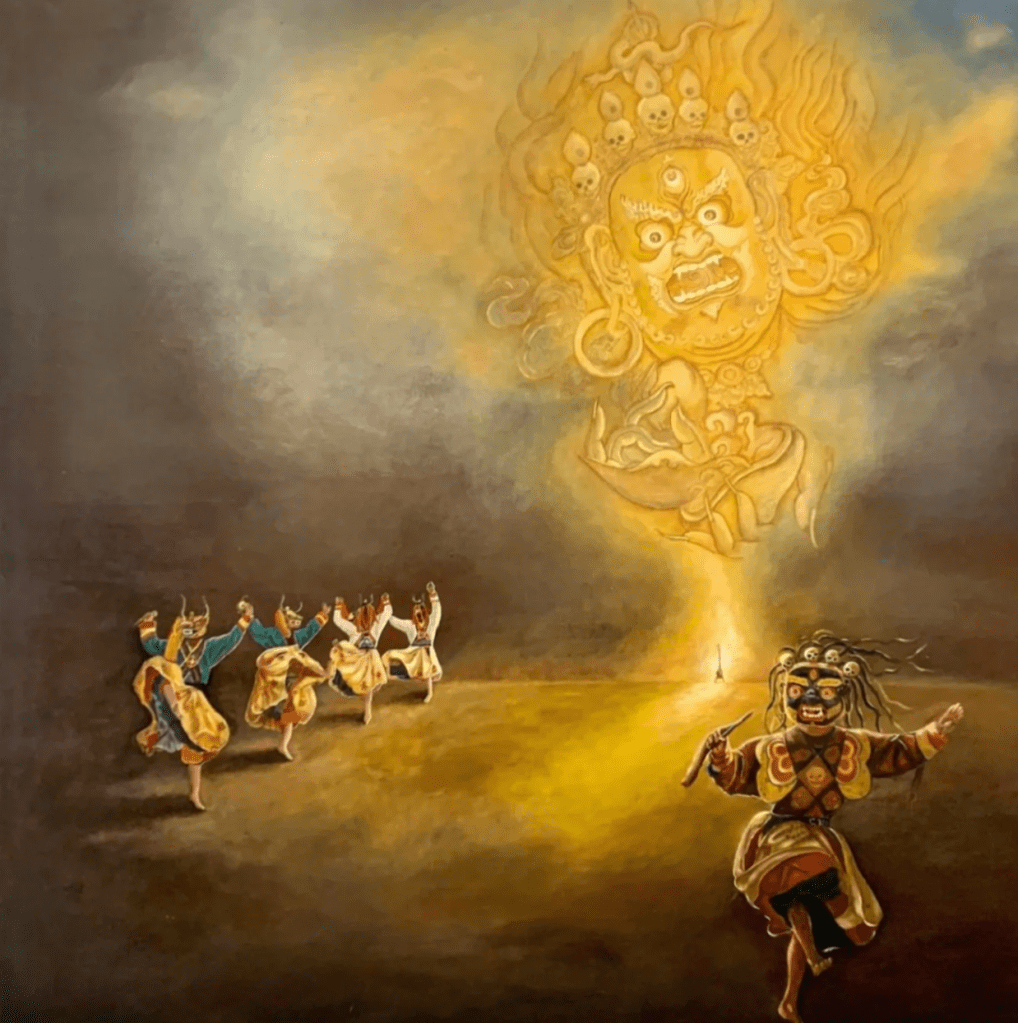
The Wounds of Beauty: Aesthetics, the Sacred, and the Paradox of Intensity
“FIRST WOMAN: Quite by chance I found this street. A beautiful street it was, so beautiful I could have wept…Heavens, how beautiful it was. Indescribably beautiful. How can I tell you, how can I tell you…
SECOND WOMAN: Don’t say a word.
FIRST WOMAN: When it’s too beautiful, it’s heartbreaking.”
As Eugène Ionesco’s First Woman in his play, A Stroll in the Air, realizes, the most overwhelming experiences of beauty, love, and the sacred can tip into another extreme—heartbreak, terror, dissolution. This course explores that paradox of intensity as a question of performance, tracing it across ritual traditions, philosophical texts, and aesthetic forms. Drawing on performance and ritual theory, aesthetics, and the philosophy of religion, this course asks: How does the sacred arrive through experiences of intensity—moments in which feeling or perception becomes so extreme that it collapses into its opposite? What happens to the self when experience exceeds one’s capacity to contain it? And how do communities develop ritual and aesthetic practices to manage—and sometimes actively produce—such moments of dissolution? The course also turns the argument against itself, asking whose dissolution gets valorized, whose experience counts as sacred, and what assumptions about power and gender are embedded in the frameworks we use to study religious intensity. From Rudolf Otto’s trembling before the holy to Bataille’s erotics of annihilation, from the Eucharist to the mysticism of Angela of Foligno, from Rilke’s terrifying angels to Wilde’s fatal love, the course argues that such extremes of religious and aesthetic experience are not accidental; rather, they are precisely the point.
In 2024, my teaching was recognized with Columbia’s Teaching Scholars Fellowship, which supported the design and instruction of an original undergraduate seminar, The Body and/in Performance: Dance & Drama in Tibet & China. Organized thematically around elements such as masks, music, ritual, and technique, the course centered Tibetan and Chinese performance theories as primary analytical frameworks rather than treating them as supplementary to Western models. For this class, I also organized workshops with trained artists in Beijing Opera, Kunqu Opera, Tibetan Buddhist tantric dance, and Tibetan folk dance. These sessions allowed students to encounter course concepts through practice and dialogue, followed by Q&A discussions that connected their embodied experience to the assigned readings.
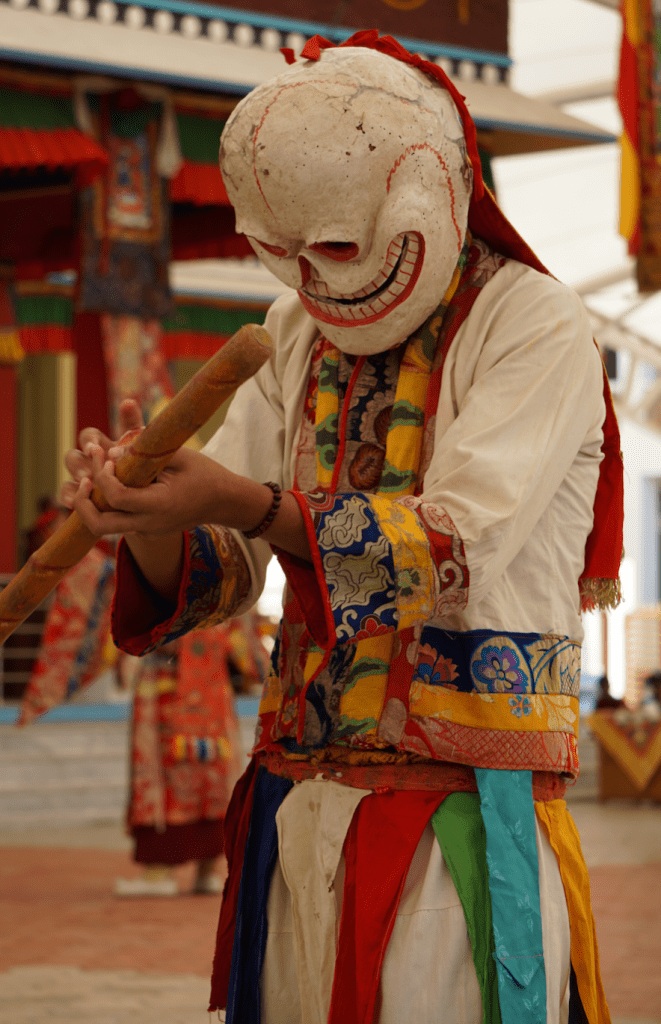
The Body and/in Performance: Dance and Drama in Tibet & China
This seminar examines the body and bodily practices in various performance traditions in Tibet and China by reading theory from the fields of performance and dance studies alongside regional case studies of dances and dramas in East Asia. In addition to required course readings, students will watch performances on film (though also live in New York City where/if possible), read play scripts, and participate in practicums to gain an embodied understanding of the course’s subject matter. Practicums include workshops with renowned Beijing opera star, Shi Yihong, dance journalist Karen Greenspan, and the Kunqu Society of New York. After a brief introduction to the fields of performance and dance studies, course meetings will focus on different performative bodily expressions; for example, the expression of “culture,” history, politics, affect and emotion, and so on.

